
Silicone Roof Coating in Appleton, WI
Silicone Coating for Ponding-Prone Fox Valley Industrial Roofs
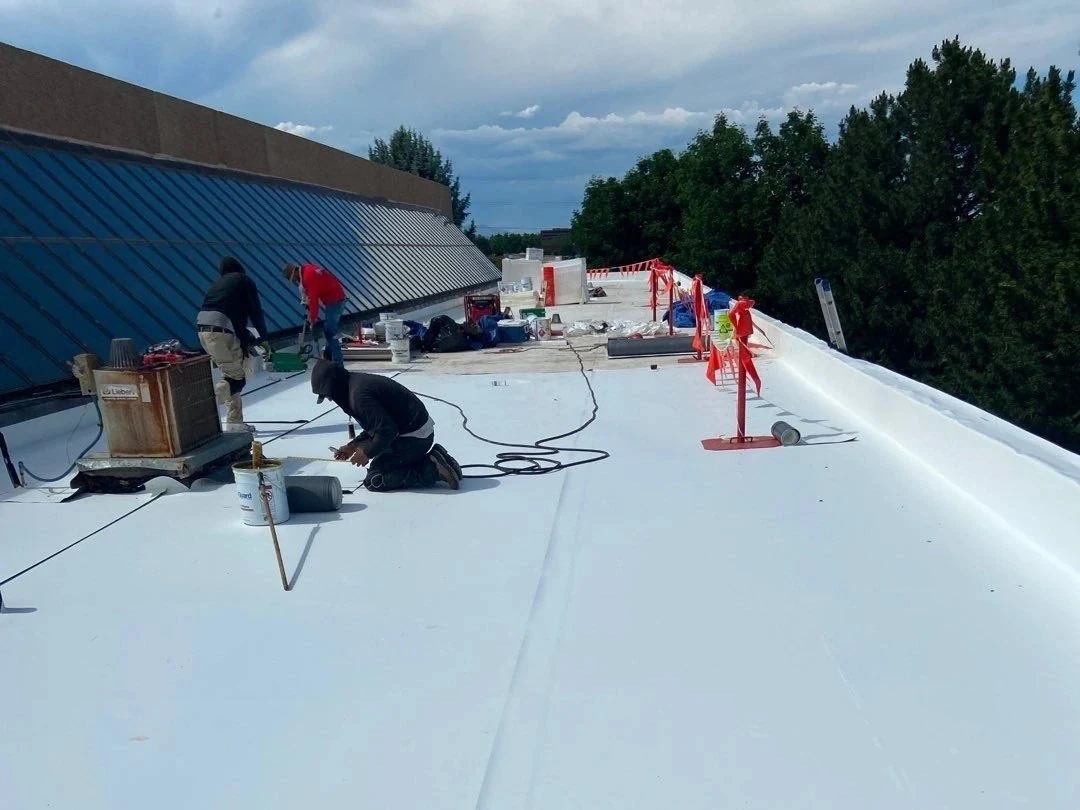
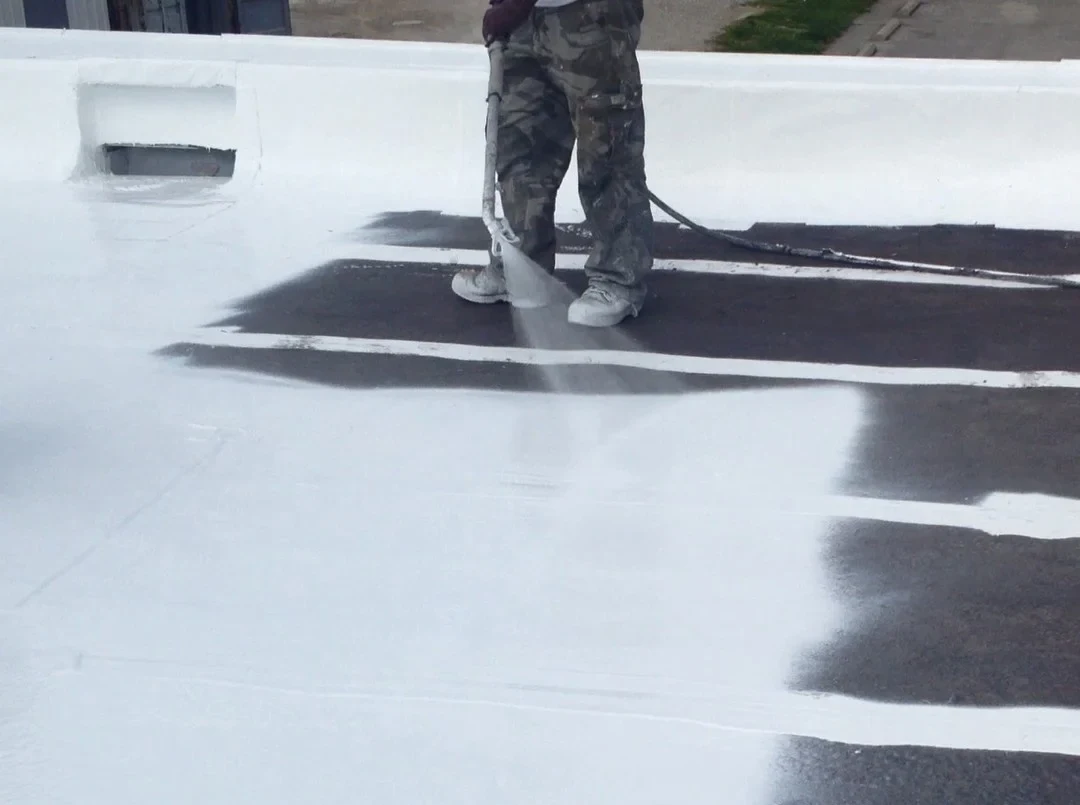
Silicone coating is the tool we reach for when a roof still has structural life left in it but the surface has degraded to the point of active or near-term leaks. It is a restoration play, not a new-roof spec, and it works best on buildings where a full tear-off is not yet justified by the roof's underlying condition.
What Silicone Solves That Other Coatings Do Not
Silicone's defining advantage over acrylic and most other coating chemistries is its tolerance for standing water. A significant share of the Fox Valley's aging industrial roof stock, including older buildings around Combined Locks and the redeveloped mill site properties in Kimberly, carries some degree of ponding from decades-old drainage design that predates current slope-to-drain standards. Acrylic coatings can soften or degrade under prolonged ponding; silicone holds up to it far better, which makes it the right chemistry for roofs we cannot fully re-slope within the project budget.
That tolerance does not mean ponding is fine to leave unaddressed. We still push for drainage improvements where feasible, tapered insulation crickets at problem areas, or additional drains where the roof design allows it. Silicone buys durability against water the roof is already holding; it does not fix why the water is sitting there in the first place.
Moisture Scanning Before Any Coating Goes Down
Coating over wet insulation traps moisture under a new waterproof layer and accelerates deck deterioration that was already underway, which is why every coating project starts with a moisture scan, not a visual inspection alone. We use infrared or capacitance scanning to map wet insulation across the roof field before committing to a coating scope, because a roof that looks dry from below can still be holding water in isolated pockets that will keep degrading regardless of what goes on top.
Where the scan turns up wet insulation, that area gets cut out and replaced before coating, not coated over and hoped past. Skipping this step is the single most common reason a coating project fails early, and it is not a step we shortcut to hit a lower number on the estimate.
Extending Service Life Without a Tear-Off
For an owner weighing a full reroof against a restoration coating, the math usually comes down to how many years of service life the coating can realistically add against the cost of a complete replacement. On a roof with sound insulation, intact seams, and no structural deck issues, a properly applied silicone system can meaningfully extend the roof's useful life at a fraction of tear-off and replacement cost.
We are direct with owners about where that math stops working. A roof with widespread wet insulation, failing seams across most of the field, or deck-level structural concerns is not a good coating candidate regardless of the budget pressure to avoid a full reroof, and coating it anyway just delays a more expensive problem.
- Roofs with intact seams but weathered, chalking, or UV-degraded membrane surface
- Buildings with documented ponding that cannot be fully corrected within the project budget
- Aging assets where ownership wants to extend service life ahead of a planned future replacement
- Roofs that passed a moisture scan with minimal or isolated wet insulation
- Reflective-roof retrofits where reducing membrane surface temperature is a secondary goal
Application Conditions and Cold-Weather Windows
Silicone coating needs a dry substrate and stable ambient conditions to cure properly, which narrows the practical application window in a Fox Valley climate to the warmer months with lower humidity and predictable dry stretches. We schedule coating projects around that window rather than pushing product down in marginal fall or spring conditions where dew point and overnight moisture can compromise the cure.
Coating thickness matters as much as chemistry. Mil thickness gets measured across the roof during application, particularly over seams, fastener heads, and flashing details where a thin spot undermines the whole system's water resistance regardless of how well the field coating cured.
Recoat Cycles and Long-Term Maintenance
Silicone coatings are not a one-time application that lasts indefinitely. Most systems carry a recoat interval, and we build that into the maintenance conversation up front so ownership is planning for it rather than treating the coating as a permanent fix. A roof with a coating history should get walked on a regular schedule to catch surface wear before it becomes a leak.
We track coating age and condition as part of ongoing maintenance programs for buildings that have gone the restoration route, since a coated roof still needs the same attention to drains, flashings, and penetrations that any roof does.
Questions Fox Valley Owners Ask About Silicone Coating
Can silicone coating fix a roof with standing water?
Silicone tolerates ponding better than most coating chemistries, but it does not solve the drainage problem causing the ponding. We address slope and drainage where feasible alongside the coating.
How do you know if a roof is a good candidate for coating instead of replacement?
A moisture scan showing minimal wet insulation, sound seams, and no structural deck issues are the main qualifiers. We do not recommend coating over a roof that fails those checks.
What happens if you coat over wet insulation?
The moisture stays trapped under the new waterproof layer and continues degrading the deck and insulation from below. That is why every coating project starts with a moisture scan.
How long does a silicone coating last before it needs recoating?
Recoat intervals vary by product and exposure. We build the expected interval into the maintenance plan rather than treating the coating as permanent.
Can silicone coating be applied in the fall or winter in Wisconsin?
The application window is narrower in cold, humid, or unpredictable weather. We schedule coating work around stable dry conditions rather than pushing it through a marginal season.