
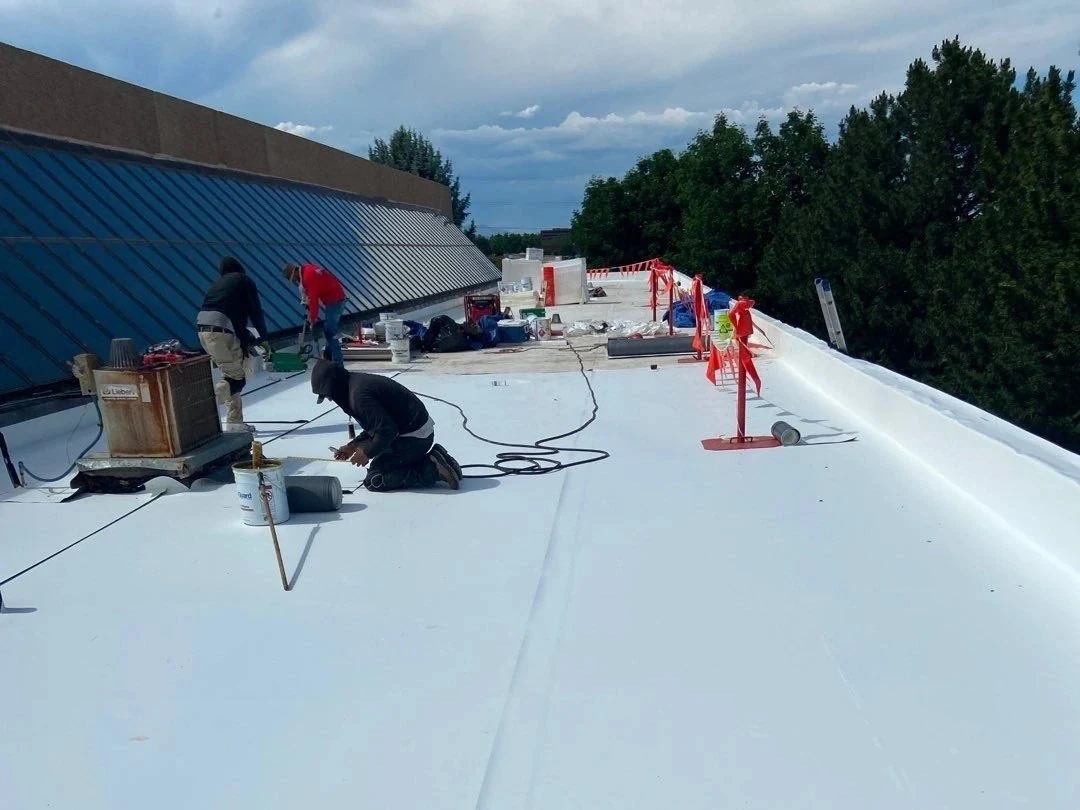
SBS Modified Bitumen Roofing in Appleton, WI
SBS Modified Bitumen on Kaukauna and Fox Valley Industrial Roofs
A meaningful share of the older industrial buildings around Kaukauna's paper mill district and the Fox River corridor still carry built-up or modified bitumen roofing, and SBS remains the modern version of that multi-ply approach. It is heavier, more labor-intensive to install than a single-ply membrane, and on the right building it is still the right system.
Multi-Ply Redundancy on Older Roof Assemblies
SBS modified bitumen is a rubberized asphalt sheet reinforced with polyester or fiberglass mat, typically installed in two or more plies with staggered seams so no single seam line runs continuously through the whole roof thickness. That redundancy is the system's core advantage: a compromised seam in one ply does not automatically become a leak path if the ply beneath it is intact and properly lapped.
We see this redundancy matter most on older industrial buildings where the roof has already been patched multiple times over the decades and the deck itself carries some irregularity. A multi-ply system tolerates that history better than a single-ply sheet would, since it is not relying on one continuous membrane plane to stay watertight.
Torch-Applied Versus Cold-Applied and Self-Adhered Methods
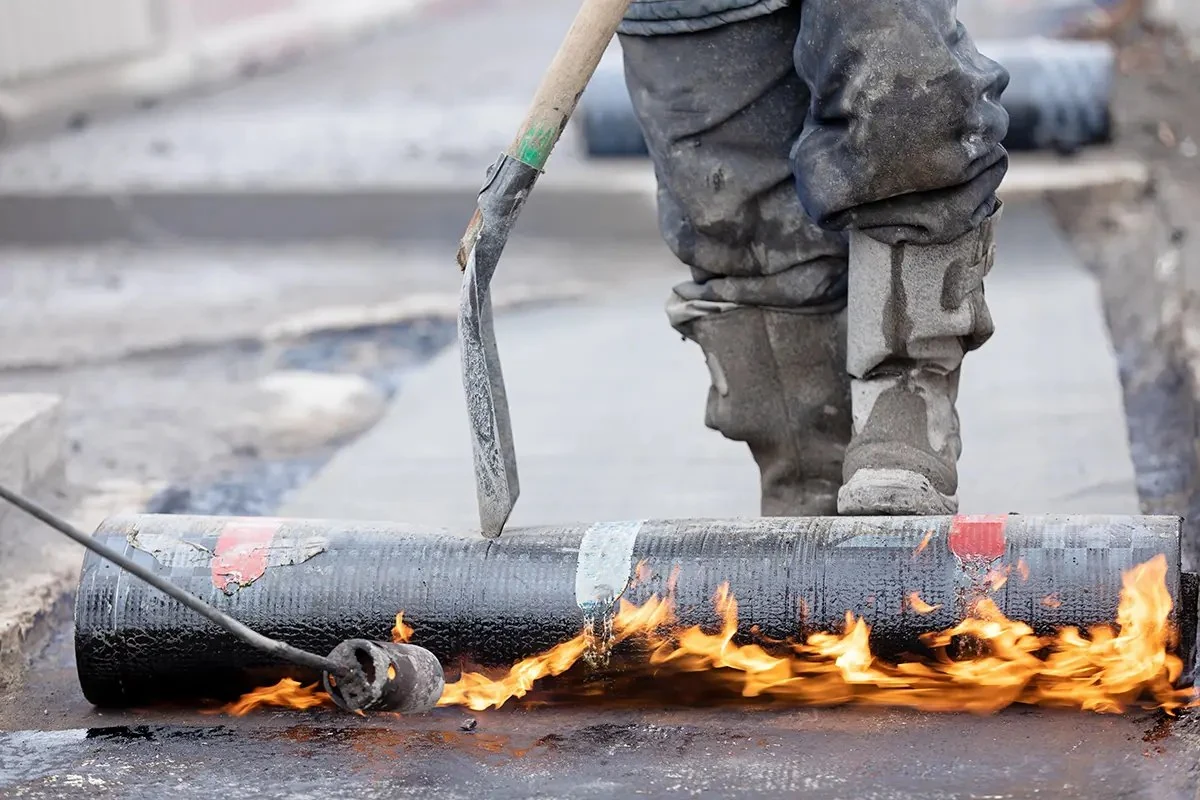
Traditional SBS installation uses a propane torch to melt the asphalt backing and bond each ply to the substrate, which produces a strong bond but carries real fire risk, particularly on re-covers over combustible insulation or near industrial neighbors where hot work permits and fire watch requirements apply. Buildings close to active paper mill operations or other industrial tenants in Kaukauna's district often fall under stricter hot-work protocols for exactly that reason.
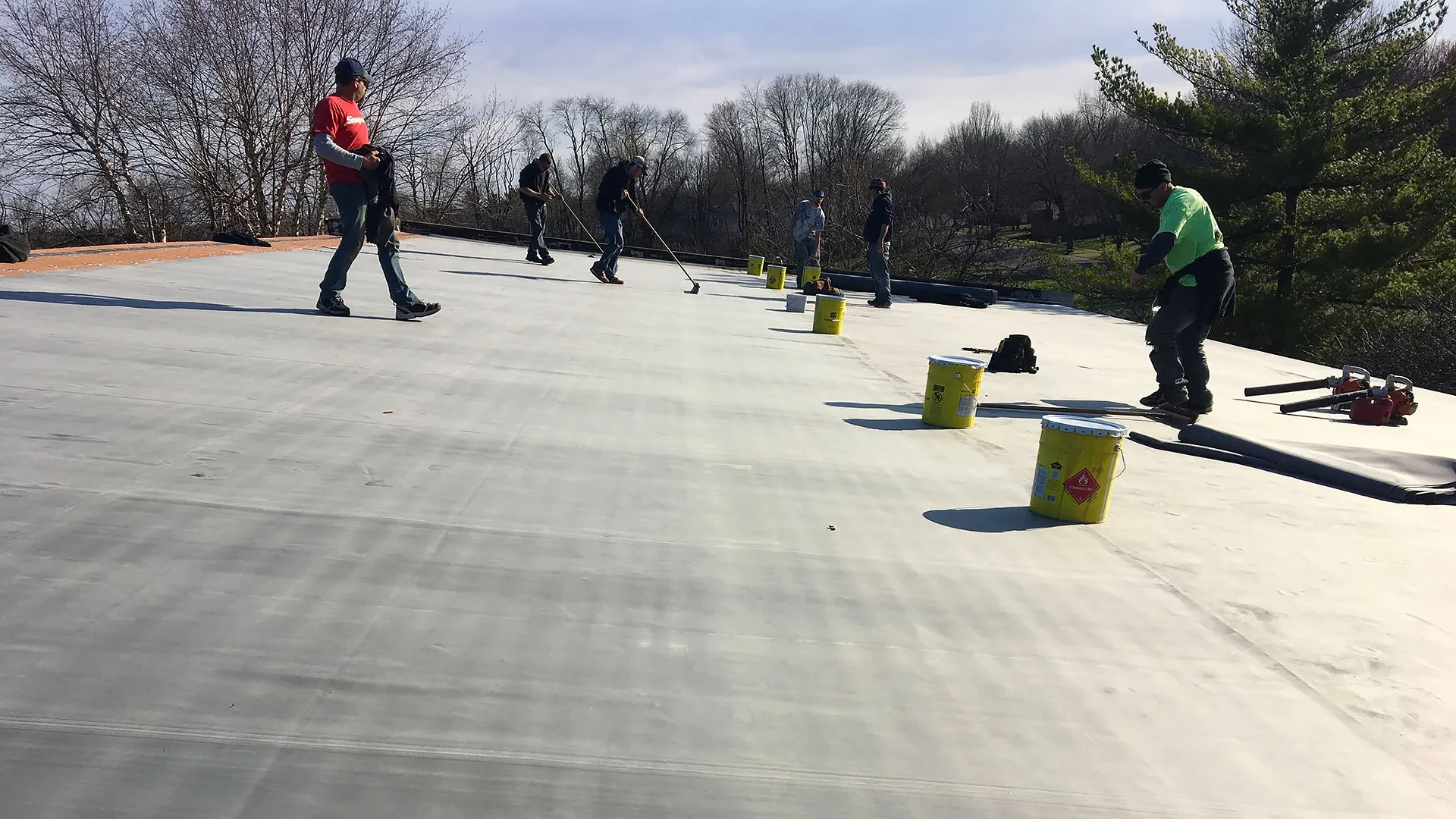
Cold-applied adhesive and self-adhered SBS sheets have become the more common choice on projects where torch work is restricted or where the owner wants to reduce fire risk during installation. Self-adhered systems trade some of the torch-applied bond strength for a meaningfully lower installation risk profile, and we walk owners through that tradeoff before recommending either method.
Snow Load and Structural Buildup on Multi-Ply Systems
A multi-ply SBS assembly adds more dead load to the roof structure than a single-ply membrane does, which matters on older buildings where the original design load did not anticipate a heavier roofing system layered on top of existing insulation. Ground snow load figures in Outagamie County already run higher than most of the country, and we confirm the deck's structural capacity before recommending a full multi-ply re-cover on any older building rather than assuming the original framing has margin to spare.
On buildings where structural capacity is a real question, a lighter single-ply recover system sometimes makes more sense than adding SBS plies on top of an aging deck, even if the owner's initial preference was to match the existing built-up roofing.
Where SBS Still Fits the Fox Valley's Building Stock
- Older industrial buildings with a multi-decade history of built-up or modified bitumen roofing
- Roofs with irregular deck conditions that benefit from multi-ply redundancy
- Buildings where the owner prioritizes puncture resistance over the lightest possible system
- Re-covers where matching the existing roofing type avoids compatibility questions with old ballast or ply layers
- High-traffic mechanical roofs where a heavier surface tolerates equipment and foot traffic well
Cap Sheet UV Wear and Granule Loss
The top ply, or cap sheet, on most SBS systems carries a mineral granule surface that provides both UV protection and a degree of impact resistance. Over years of sun exposure and freeze-thaw cycling, granule loss is the visible early sign that the cap sheet's protective layer is thinning, and it is one of the first things we check during a roof inspection on an older SBS system.
Granule loss alone does not mean the roof needs replacement, but it does mean the asphalt beneath is taking more direct UV exposure than it was designed for, and we factor that into the remaining service-life estimate we give ownership rather than waiting for an active leak to force the conversation.
Questions Fox Valley Owners Ask About SBS Modified Bitumen
Is SBS modified bitumen still a viable choice for a new roof?
Yes, particularly on older industrial buildings where multi-ply redundancy and puncture resistance matter more than the lightest possible system.
Is torch-applied SBS safe near industrial neighbors?
It requires proper hot-work protocols and fire watch, which can be more restrictive near active industrial operations. Cold-applied or self-adhered SBS avoids that risk entirely.
Does SBS add too much weight to an older roof deck?
It can, depending on the existing structure and how many plies are being added. We confirm structural capacity before recommending a full multi-ply system on an older building.
How do I know if my SBS roof's cap sheet needs attention?
Visible granule loss, exposed asphalt, and blistering are the early signs we look for during inspection, well before an active leak develops.
Can SBS be installed alongside other roofing systems on the same building?
In some cases, yes, particularly on buildings with roof sections added at different times, though we confirm compatibility at the transition details before mixing systems.
Related
Ready to review the roof scope?
Request a Roof AssessmentDetailing SBS at Fox Valley Transitions
SBS work succeeds or fails at the places where the roof changes direction. We trace the membrane through parapet bases, equipment curbs, pitch pockets, drains, scuppers, and tie-ins to older roof sections before deciding whether a torch-applied, cold-applied, or self-adhered detail is appropriate. On an occupied Appleton property, the application method also has to fit the building's fire controls, air intakes, and operating schedule. We record those limits before material arrives so the field crew is not improvising around a live facility. The closeout record identifies repaired transitions, new flashings, drain work, and any older roof areas left in place. That gives the facilities team a useful map for spring inspections after freeze-thaw movement and for fall checks before snow covers the details that are hardest to see.