
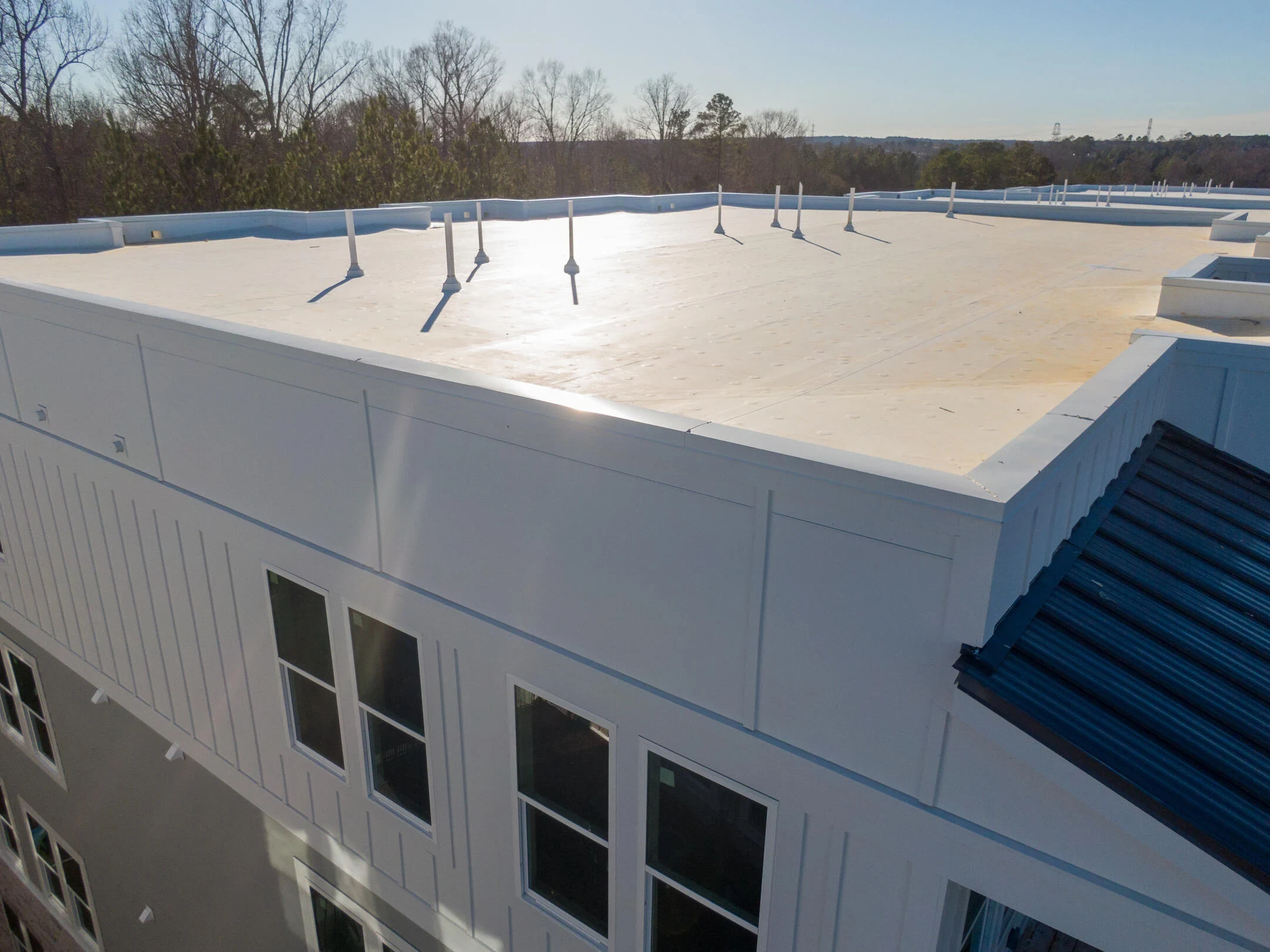
Spray Polyurethane Foam Roofing in Appleton, WI
Spray Foam for Irregular Roof Geometries in the Fox Valley
Spray polyurethane foam is the system we bring up when a roof's shape or penetration count makes a conventional sheet membrane genuinely difficult to detail well. It is not a mainstream default in this climate, but on the right building, particularly older industrial roofs with a long history of add-on equipment, it solves problems a welded or taped membrane cannot.
Where a continuous Membrane Actually Matters
Older paper mill and manufacturing buildings along the Fox River corridor, including facilities in Kaukauna and Combined Locks that have accumulated decades of rooftop equipment, often carry dense penetration counts: steam stacks, exhaust vents, conduit runs, and platform curbs added at different points in the building's history without a coordinated roofing plan. Detailing a sheet membrane cleanly around that many irregular penetrations means a high number of field seams, and each one is a potential future leak point.
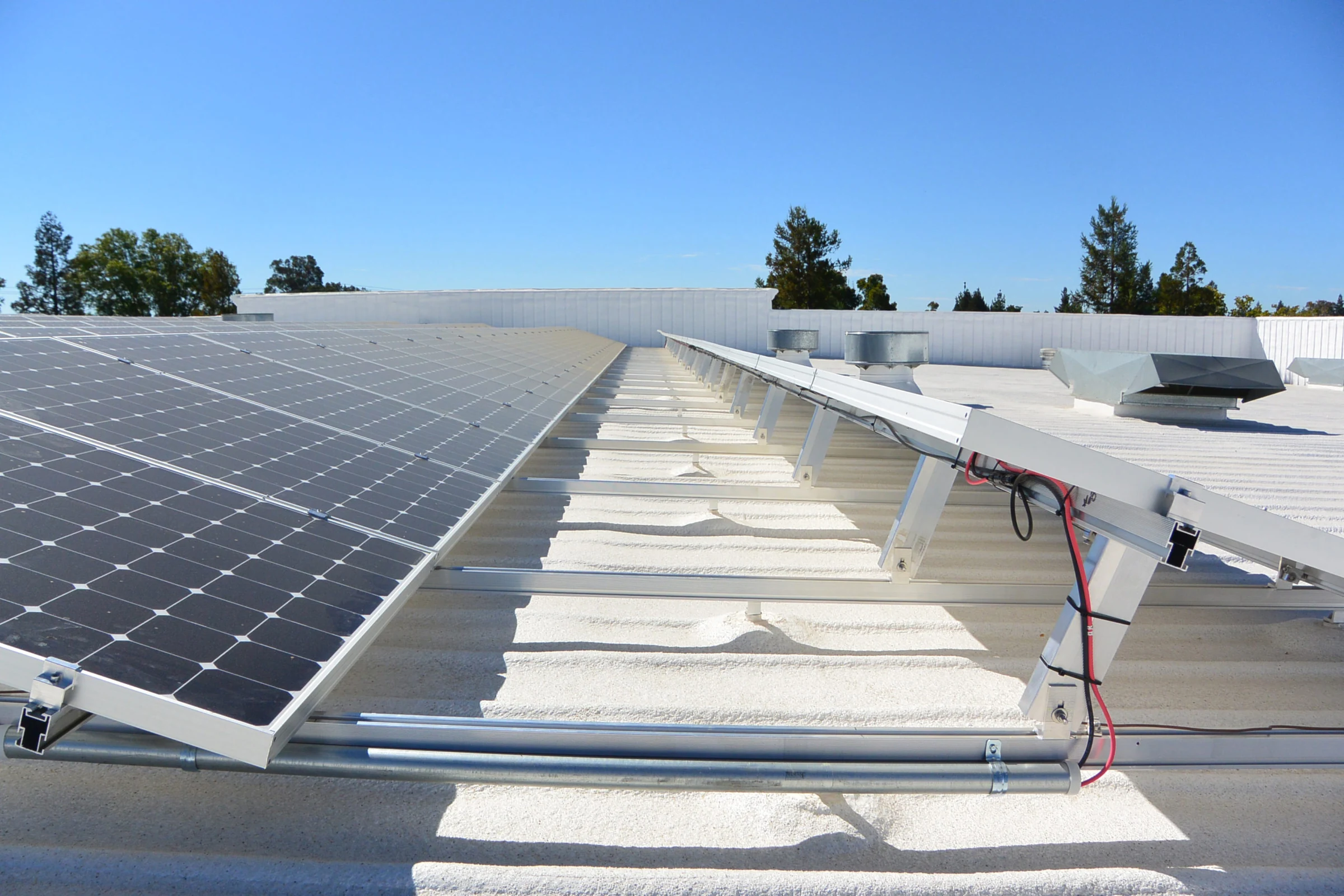
Spray foam goes down as a liquid that expands and cures in place, following the roof's actual geometry rather than requiring the roof to conform to sheet widths and seam layouts. Around a cluster of odd-shaped penetrations, that means fewer transitions, fewer seams, and a membrane that follows the building rather than fighting it.
R-Value Performance in a Cold-Climate Design
Foam is both the insulation and the substrate for the coating system in one application, which gives it an R-value per inch that outperforms most board insulation products on a thickness basis. In a climate where Outagamie County's winter design temperatures push insulation performance to matter for real energy cost, that combined structural-and-thermal role is a genuine advantage over a membrane-plus-separate-insulation assembly.
We spec foam thickness based on the specific building's insulation target and existing R-value, not a blanket depth across every project, since a re-cover over an already well-insulated deck needs a different foam depth than a retrofit over an aging, poorly insulated older industrial roof.
The Elastomeric Coating That Protects the Foam
Spray foam itself is not UV-stable and cannot be left exposed to sunlight, so every foam roof gets a protective elastomeric coating, typically silicone or acrylic, applied over the cured foam before the project is complete. That coating is what actually weathers the sun, rain, and foot traffic; the foam underneath is the insulation and shape-forming layer.
Because the coating is the wear surface, its condition drives the roof's ongoing maintenance needs more than the foam does. We inspect coating thickness and condition on a regular schedule for foam roofs specifically, since a thin or worn coating spot exposes the foam beneath to UV degradation faster than most owners expect.
Recoat Cycles and Long-Term Ownership Commitment
A foam roof is not a one-time install the way a membrane roof can feel like. The protective coating needs periodic recoating over the life of the system, and owners considering foam need to go in understanding that maintenance commitment rather than assuming it is a lower-maintenance system than the membrane alternatives.
For an owner willing to stay on that maintenance schedule, foam roofs can run a very long service life because the foam substrate itself does not fatigue the way a membrane's seams do. For an owner who wants to install a roof and not think about it again for fifteen years, foam is usually not the right recommendation.
Where Spray Foam Fits the Fox Valley's Older Industrial Stock
- Roofs with dense, irregular penetration clusters from decades of added rooftop equipment
- Buildings needing added insulation depth where a membrane-only retrofit would fall short
- Complex roof geometries with valleys, crickets, or non-standard transitions
- Owners committed to a scheduled recoat maintenance program
- Retrofit projects over multiple existing roof layers where a lightweight system reduces added structural load
Application Conditions and Cold-Weather Limits
Foam application requires dry substrate conditions and a stable temperature and humidity window to expand and cure correctly, which narrows the practical installation season in a Fox Valley climate similarly to coating work. Wind is also a real constraint during spray application, since overspray control becomes difficult in gusty conditions common across the area's more open industrial parcels near Greenville and the airport corridor.
We schedule foam projects around stretches of predictable weather rather than pushing application through marginal conditions, since a foam application compromised by moisture or improper cure temperature does not fully correct itself once the coating goes over it.
Questions Fox Valley Owners Ask About Spray Foam Roofing
Is spray foam a good fit for a Wisconsin winter climate?
Foam performs well once cured and coated, offering strong insulation value. The installation window itself is limited to stable, dry weather conditions, similar to coating projects.
How often does a foam roof need recoating?
Recoat intervals depend on the coating product and exposure, but foam roofs do require a scheduled maintenance commitment that owners should plan for from the start.
Can spray foam go over an existing membrane roof?
Often yes, provided the existing substrate is dry and structurally sound, which we confirm before recommending foam as a retrofit option.
Why would someone choose foam over TPO or EPDM?
Foam's main advantage is handling irregular geometry and dense penetration counts with fewer seams, plus combined insulation and substrate performance in one system.
Is foam roofing more expensive than membrane systems?
Upfront cost varies by project complexity, and the ongoing recoat maintenance is a real cost owners need to factor in alongside the initial installation price.