
Insurance Documentation Support in Appleton, WI
Documenting Roof Damage So Adjusters Have What They Need
An insurance claim on a commercial roof lives or dies on documentation quality, not on how the repair conversation goes with an adjuster. We build a factual record of roof condition and damage as our own scope of work, separate from any repair we might eventually perform, so an owner has solid documentation regardless of who ends up doing the fix.
What We Document and Why Timing Matters
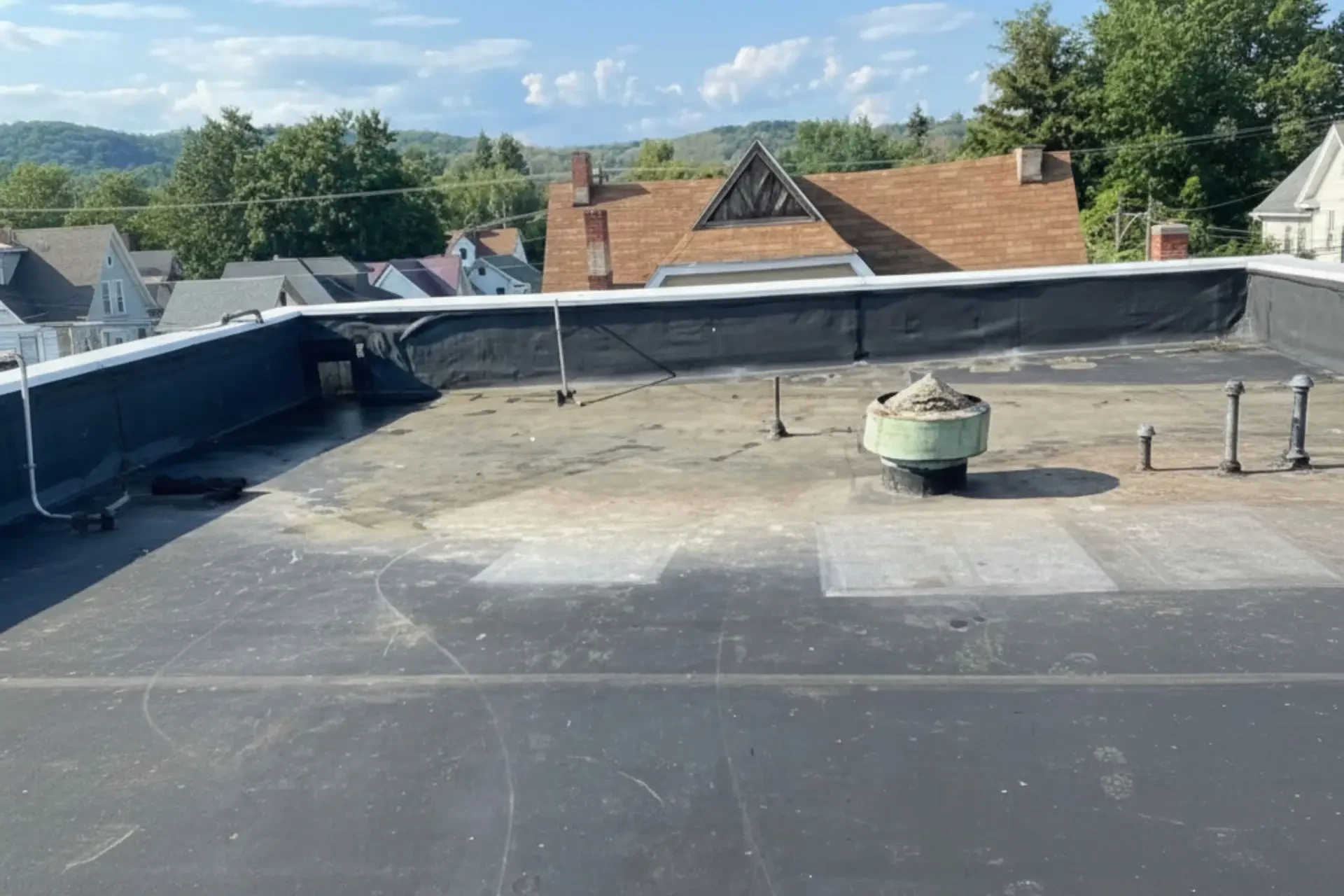
Every damage assessment gets dated, located on a roof plan, and photographed from multiple angles, including wide shots for context and close-ups for detail. Timing the visit close to the reported storm event matters, since weather damage can change character within days, a wind-lifted seam can work itself back down, or a punctured membrane can let more water in and obscure the original point of entry.
We record conditions as we find them without waiting for a full repair scope to be finalized, since a delayed documentation visit gives an adjuster less to work with than one done promptly after the event.
Distinguishing Storm Damage From Pre-Existing Wear
Adjusters look closely at whether damage was actually caused by the reported event or was already present from age and general wear. We document both honestly, noting membrane condition, granule loss, seam age, and prior repair history alongside the new damage, because a documentation record that ignores obvious pre-existing wear looks less credible, not more, and can work against an owner's claim rather than for it.
On older buildings around Kaukauna and Kimberly with multiple roofing generations stacked from decades of recover work, separating new storm damage from long-standing wear takes a careful eye, and we walk owners through exactly what we're seeing and why we're categorizing it a certain way.
- Dated, located photo documentation from initial site visit
- Infrared moisture scan mapping to show extent of water intrusion
- Written condition report distinguishing new damage from prior wear
- Repair scope and cost estimate for the documented damage
- Follow-up documentation if damage changes before repair begins
- Coordination scheduling for adjuster site visits when requested
Moisture Scans and Photo Records as Claim Evidence
Infrared moisture scanning gives an objective, instrument-based record of how far water has spread under the membrane, which carries more weight in a claim conversation than a visual description alone. We include scan output alongside photos in the documentation package, showing the actual extent of affected insulation rather than leaving that scope open to interpretation.
This matters most on buildings where ice dam or wind-driven rain damage has pushed water well beyond the visible entry point, since a claim based only on the visible surface damage can undervalue the actual repair scope needed once wet insulation is factored in.
Working Alongside Your Adjuster, Not Around Them
We're glad to walk a roof with an adjuster directly, answering technical questions about membrane condition, wind uplift zones, or drainage design as they come up. Our documentation and repair estimate are meant to give both the owner and the adjuster a shared, factual starting point rather than a number pitched to maximize a claim payout, since an inflated estimate tends to slow a claim down rather than speed it up.
We also break down repair scope in the same categories an adjuster typically works from, membrane, insulation, flashing, and drainage, rather than a single lump sum, which makes it easier to review line by line against a policy's coverage terms instead of negotiating an opaque total figure.
Portfolio Documentation for Multiple Buildings
Property owners with several buildings across the Fox Cities, from an office park near downtown Appleton to a distribution building around Fox Crossing, sometimes need documentation across multiple properties after a single widespread storm event. We keep a consistent report format across every building in that scenario, which makes it easier for an owner or their insurance broker to track claims across a portfolio rather than reconciling reports that look different from site to site.
We're your roofing contractor, not a public adjuster , we document and substantiate the roof damage so you and your adjuster work from an accurate scope.
What We Won't Promise
We don't tell owners how an adjuster will rule on a claim, and we don't promise a specific payout or approval outcome, since that decision sits entirely with the owner's insurance carrier based on their policy terms. What we control is the quality and honesty of the documentation supporting the claim, and that's where we put our effort rather than making commitments about a process we don't decide.
How Our Documentation Process Works
How soon after storm damage should we call for documentation?
As soon as practical, ideally within a few days of the event, since roof conditions can change and early documentation gives the clearest record of what actually happened.
Will you meet with our insurance adjuster on site?
Yes, we're available to walk the roof with an adjuster and answer technical questions about the damage and repair scope directly.
Can you guarantee our claim will be approved?
No, and we won't claim otherwise. Claim decisions are made by the insurance carrier based on policy terms; our role is providing accurate, thorough documentation to support that process.
Do you charge separately for documentation versus repair work?
Documentation and assessment are scoped and priced on their own, independent of whether repair work follows, so owners aren't locked into using us for the repair just to get a documentation report.
What if the damage gets worse before the claim is settled?
We can return for follow-up documentation if conditions change, which helps keep the claim record accurate through what's sometimes a lengthy settlement process.