
Wind and Storm Damage Roof Insurance Claims in Appleton, WI
Wind and Storm Damage Roof Insurance Claims in Appleton, WI
Severe thunderstorms move through the Fox Valley most summers, and a fast-moving line with straight-line wind gusts, or occasionally a derecho-scale event, can lift membrane and edge metal across several buildings in the same corridor within minutes. Wind damage claims tend to move faster than ice dam claims since the event is usually clear and datable, but the documentation still needs to hold up to an adjuster's inspection. We handle that documentation as your roofing contractor, on our own or alongside your carrier's inspector.
Straight-Line Wind and Derecho Damage Patterns
Wind damage on a commercial roof concentrates at the perimeter and corners first, since those zones carry the highest uplift pressure in any wind event, well before the field membrane is affected. Loose or torn edge metal, lifted membrane at the parapet line, and displaced coping are the first things we check after a wind event moves through Appleton, Grand Chute, or the manufacturing corridor along Highway 41.
Perimeter and Corner Uplift Zones
Because uplift pressure is highest at roof edges and corners, damage there can look minor from the ground while representing a real structural vulnerability if left unaddressed before the next storm system. We document these zones specifically, distinct from general field membrane condition, since adjusters typically evaluate wind claims with that same zone-based approach.
Documenting Wind Damage Before Temporary Repairs
When a roof needs an emergency tarp or temporary dry-in to stop active leaking, we document the damage first wherever it's safe to do so, since a temporary repair can obscure the original damage pattern an adjuster needs to see. We photograph and measure affected areas before covering anything, then document the temporary repair itself separately so the claim record shows both the original damage and the interim fix.
When a Single Storm Damages Multiple Buildings
A widespread wind event can affect several buildings across the same property portfolio or business park at once, and we sequence documentation and repair scheduling by severity rather than by who called first. Buildings with sensitive operations underneath move up in that sequence even when the visible wind damage looks minor elsewhere, since the consequence of a delayed repair is higher there.
Wind Damage Versus Age-Related Wear
Not every issue found after a wind event was actually caused by that wind. A membrane that was already thin from UV exposure or a seam that was already marginal from age can fail during a storm without the wind being the primary cause. We document that distinction honestly, since separating storm-caused damage from pre-existing wear affects both the claim and the long-term repair plan.
- Perimeter and corner zone inspection for wind-lifted membrane and edge metal
- Photo and measurement documentation before any temporary tarp or dry-in
- Field membrane check for debris punctures separate from direct wind lift
- Multi-building sequencing when one storm affects several properties
- Written distinction between storm-caused damage and pre-existing wear
- Coordination with your adjuster for a joint roof walkthrough
Derecho-Scale Events and Regional Response Timing
A derecho-scale windstorm can move across a wide swath of the Fox Valley and beyond in a single afternoon, and when that happens, contractors and adjusters alike are managing calls from dozens of buildings at once rather than a single isolated claim. We prioritize active leaks and structural concerns first in that scenario, and we're upfront with owners about realistic scheduling during a regional event rather than promising same-day service we can't actually deliver when demand spikes across the whole area at once.
Documenting Damage on Buildings With Rooftop Equipment
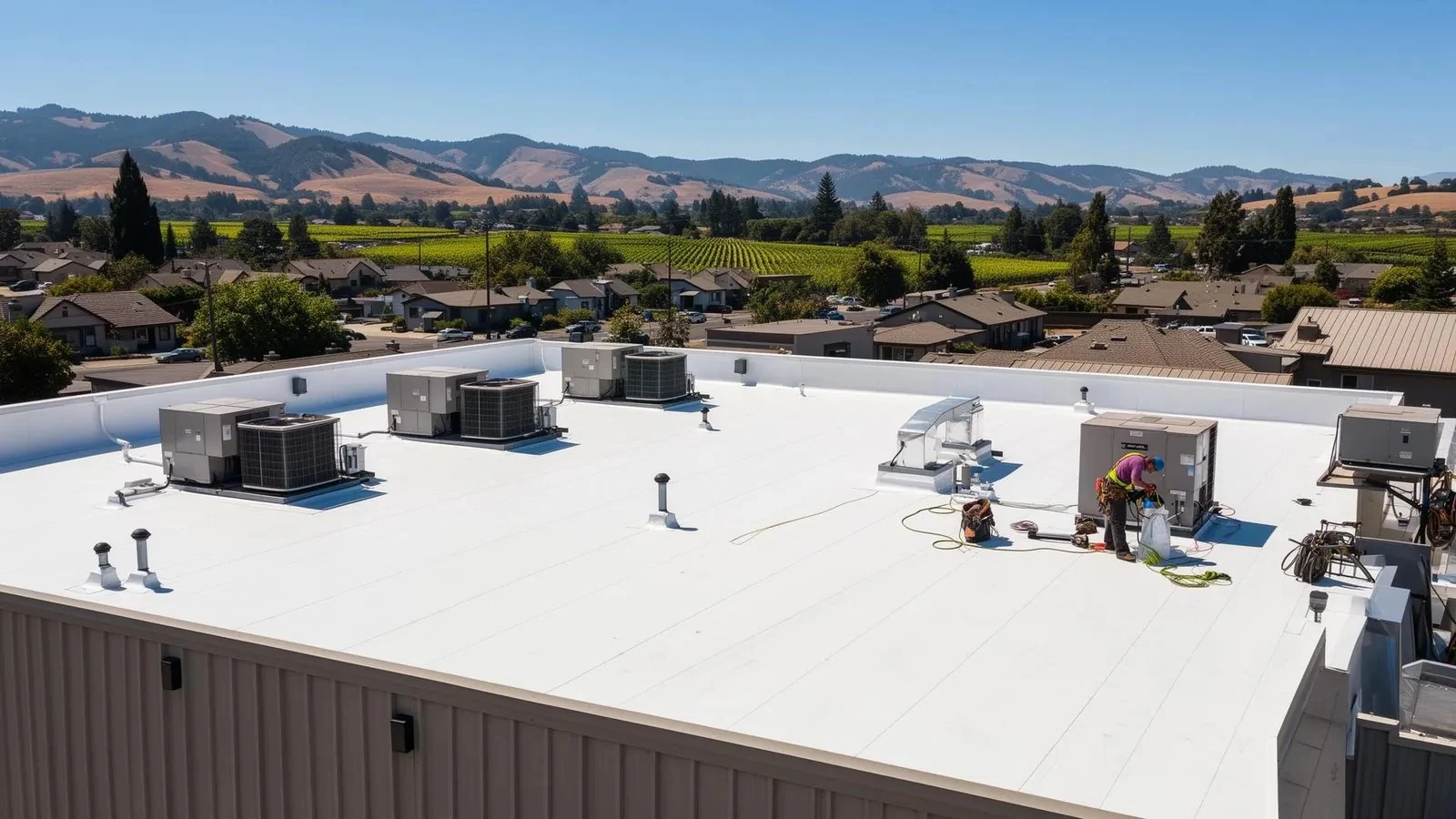
Wind events can also affect rooftop-mounted equipment, curbs, and the flashing details around them, which is a common damage pattern on manufacturing and distribution buildings with HVAC units or exhaust systems mounted on the roof deck. We inspect and document curb flashing and equipment mounting points separately from the general membrane condition, since damage there can create a leak path even when the surrounding membrane looks intact.
We're your roofing contractor, not a public adjuster , we inspect, document, and substantiate the roof damage so you and your adjuster work from an accurate, complete scope.
Related
Ready to review the roof scope?
Request a Roof AssessmentRelated
Ready to review the roof scope?
Request a Roof AssessmentFrom Wind-Damage Findings to a Repairable Scope
After documentation, we translate the affected perimeter, field membrane, flashings, and rooftop details into a contractor scope that can actually be built. Temporary dry-in is listed separately from permanent repair, and damaged areas are measured by roof section so the adjuster and owner can trace each quantity back to photographs. We also note access, occupied-space protection, material compatibility, and weather sequencing. If an older condition sits next to a storm-created opening, both are shown without treating them as the same cause. That disciplined record helps an Appleton facilities team move from emergency response to repair planning while keeping the coverage decision where it belongs,with the carrier and the insured. Each finding remains traceable.