
Built-Up Roofing in Appleton, WI
Multi-Ply Built-Up Roofing on Older Fox Cities Industrial Buildings
A lot of the roofs we get called out on around Kaukauna, Combined Locks, and the older sections of Neenah are still built-up systems, gravel or smooth surfaced, sometimes with three or four generations of patchwork on top. BUR isn't a system we sell as the default choice on new work anymore, but on legacy paper mill and manufacturing buildings it's often still the right call for repair, partial recover, or a phased replacement.
Where Built-Up Roofs Still Show Up Across the Fox Valley
Kaukauna's paper mill district has some of the oldest continuously maintained BUR roofs we service, buildings where the original deck and several ply layers have been added to over decades rather than torn off and replaced. The same pattern shows up on older converting plants in Combined Locks and on a handful of downtown Appleton buildings along College Avenue that predate the shift to single-ply membranes.
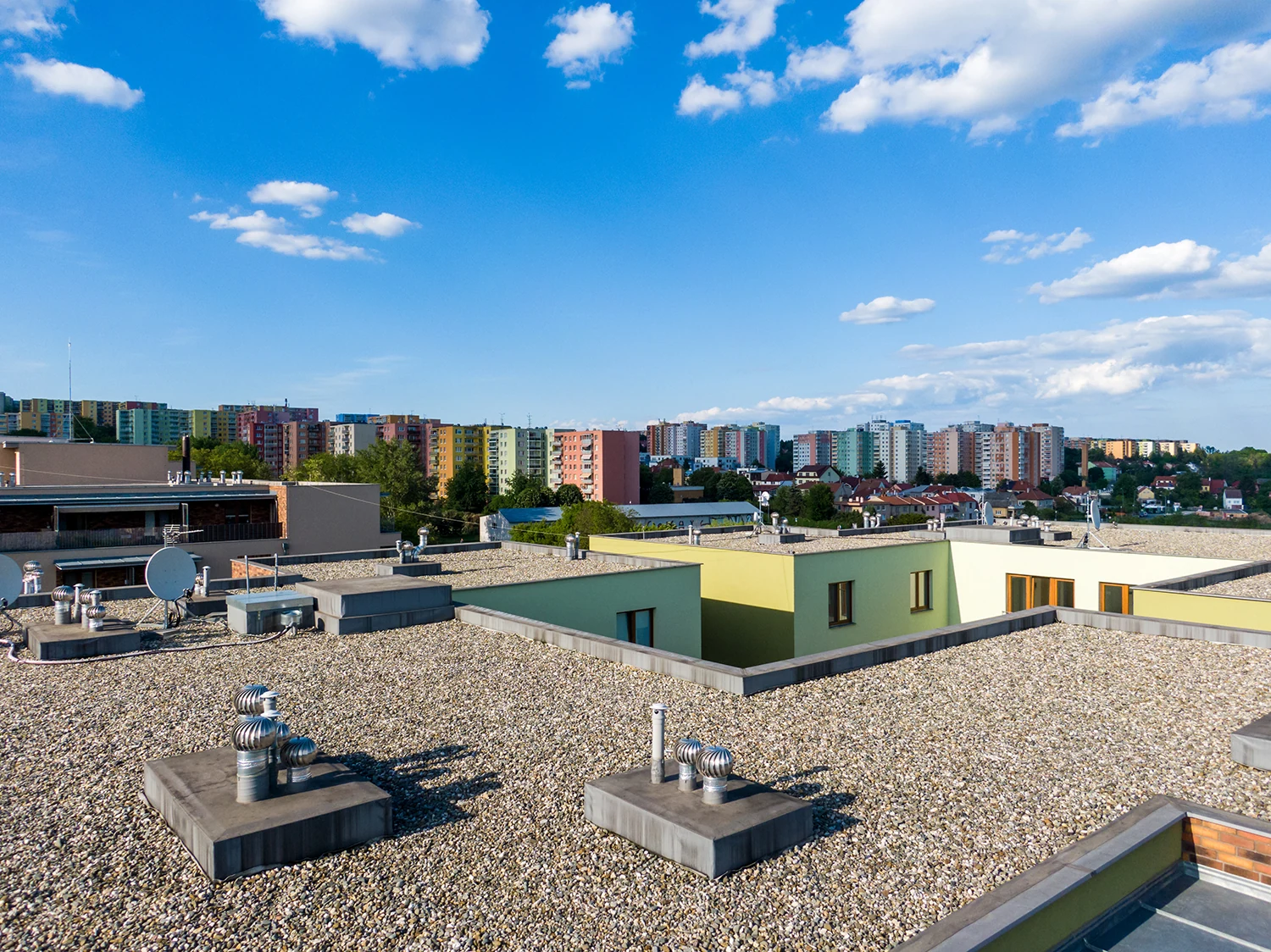
Gravel-surfaced BUR holds up differently than smooth mineral-surfaced cap sheet. The gravel layer protects the asphalt underneath from UV breakdown and adds ballast weight against wind, but it also hides problems. We can't see blistering, alligatoring, or a soft spot under two inches of gravel the way we can spot it on an exposed membrane, so inspection on these roofs means probing and sometimes pulling gravel back in test sections rather than a visual walk alone.
Hot Asphalt vs. Cold-Applied Ply Assembly
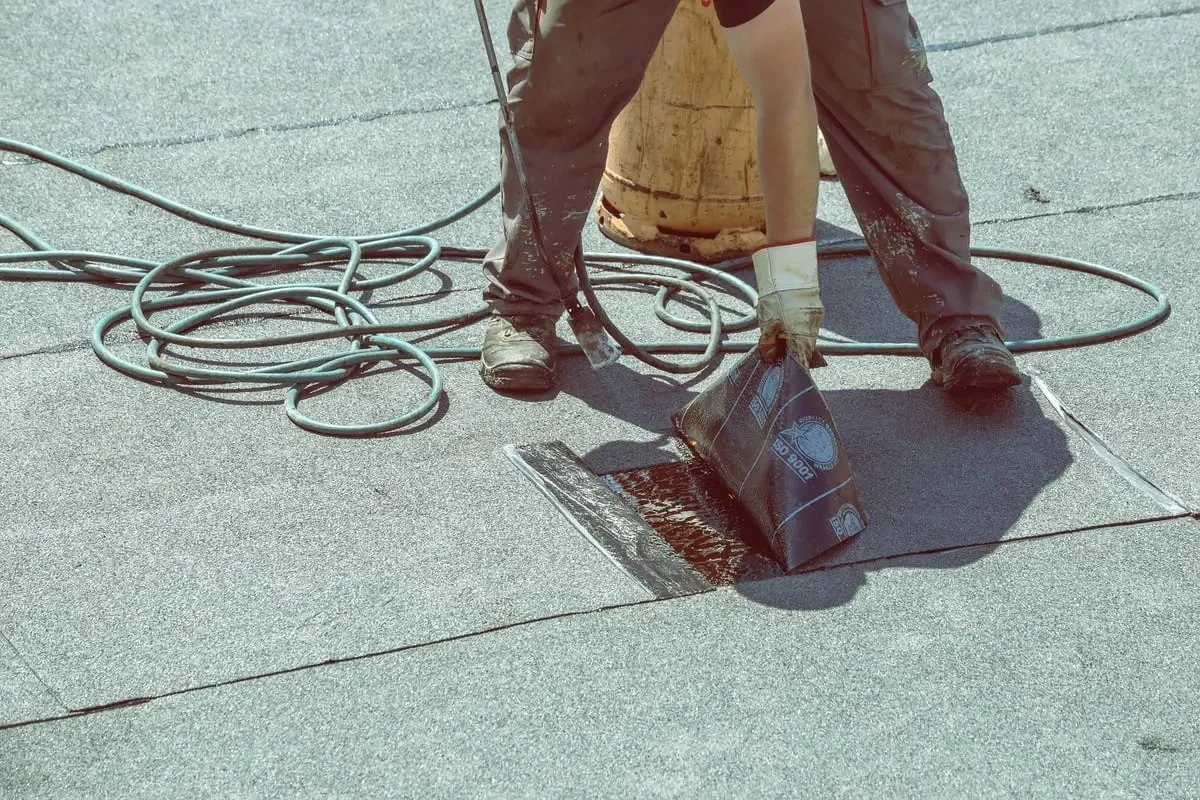
Traditional hot-applied BUR uses a kettle to melt asphalt on site, mopping it between alternating layers of reinforcing felt, typically three or four plies depending on the specification. It's still the most durable multi-ply option we install, but kettle work on an occupied building means coordinating with plant operations, since the smell and the equipment staging aren't something a working office floor or food processing line wants running overhead during business hours.
Cold-applied systems use asphalt-based adhesives instead of a kettle, which cuts down on odor and lets us stage work in tighter footprints. We use cold-applied BUR more often now on occupied buildings in Neenah and downtown Appleton where a kettle truck parked in a loading dock isn't practical, even though the material cost runs a bit higher than hot-mopped.
Gravel Ballast, Smooth Surface, and What We Install
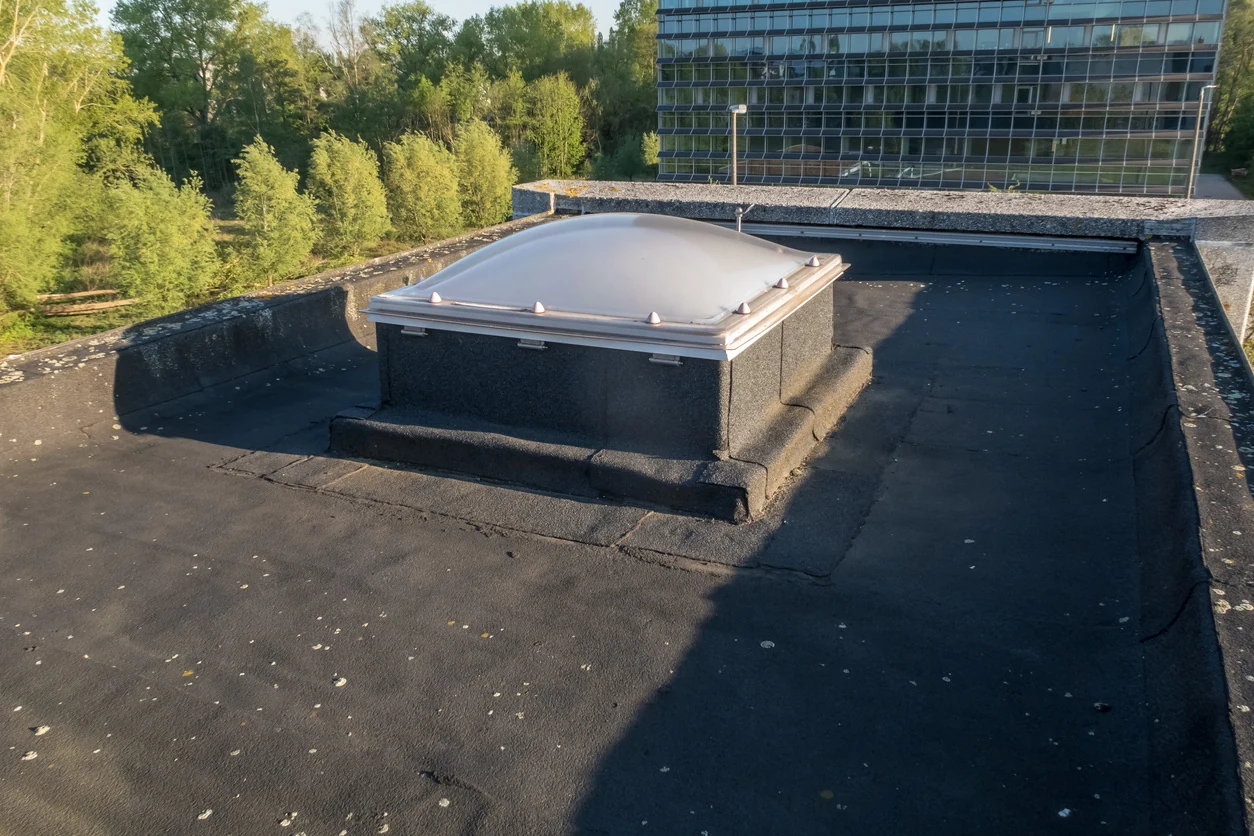
The surfacing choice depends on the building and what's above it. A smooth cap sheet with mineral granules works better where roof access for mechanical service is frequent, since loose gravel becomes a walking hazard and ends up in gutters and drains. Gravel ballast still makes sense on large flat roofs with minimal rooftop traffic, where the extra UV protection and wind resistance outweigh the maintenance tradeoff.
- Three and four-ply hot-mopped asphalt and felt systems
- Cold-applied adhesive assemblies for occupied buildings
- Gravel ballast surfacing on low-traffic industrial roofs
- Smooth mineral cap sheet on roofs with frequent mechanical access
- Base flashing and detail work at parapets and curbs
- Partial recover over sound existing plies
Phased Tear-Off on Occupied Production Buildings
A full BUR tear-off on a running paper mill or food processing plant almost never happens in one pass. We section the roof into zones and schedule tear-off and dry-in around production shifts, keeping the building watertight at the end of every work day rather than leaving open deck overnight. That's slower than a single continuous tear-off, but it's the only way to keep a plant running while the roof comes off in pieces.
Weight is also a bigger factor on BUR tear-offs than most owners expect. Multiple layers of gravel-ballasted asphalt and felt built up over forty or fifty years can carry real dead load, and pulling that off changes the structural math on the roof deck and framing below. We account for that before removal starts, not after.
When We Recommend Recover vs. Full Tear-Off
If the existing plies are dry, well-adhered, and free of major blistering, a recover with a new cap sheet or a single-ply overlay can extend service life without the cost and disruption of full tear-off. We check this with core cuts in a few spots before making that call, because a recover over wet insulation just traps the moisture problem under a new layer.
Where the deck itself has soft spots from long-term leaks, recover isn't an option regardless of how the surface looks. We've found rotted wood deck under intact-looking gravel BUR on a couple of older Fox Valley buildings, and no amount of surface repair fixes a structural deck problem.
Built-Up Roofing Questions From Fox Valley Building Owners
Is built-up roofing still a good option for a full replacement?
For most new work we recommend single-ply or modified bitumen instead, since installation is faster and doesn't require kettle staging. BUR still makes sense as a repair or recover match on a building that already has it, particularly where matching the existing roof profile matters for permitting or code reasons.
How do you inspect a gravel roof without disturbing it too much?
We use small test sections, pulling back gravel in a few representative spots rather than the whole field, then check moisture readings and ply condition before deciding whether repair, recover, or replacement is the right path.
Can you patch a leak on an old BUR roof without a full re-cover?
Yes, in most cases, as long as the surrounding plies are sound. We cut back to dry material, install new felt and asphalt layers tied into the existing field, and reset gravel or cap sheet over the repair.
Does hot asphalt work safely near food processing operations?
We schedule kettle work around production hours and containment requirements at food processing sites in Little Chute and New London, and use cold-applied systems instead when the building can't accommodate open kettle work at all.
How long can a well-maintained BUR roof last here?
Twenty to thirty years is common on gravel-surfaced systems with regular inspection and prompt flashing repair, though the oldest roofs we service in the paper mill district have been patched and partially recovered well past that with attentive maintenance.