
Modified Bitumen Roofing in Appleton, WI
SBS Modified Bitumen Roofing for Multi-Ply Fox Cities Assemblies
Modified bitumen shows up across a lot of the older commercial building stock in downtown Appleton and the surrounding Fox Cities, on roofs that were originally built-up asphalt and later re-roofed with SBS-modified cap sheets. It's a proven system here, and we still specify it new on buildings where its particular strengths line up with the roof's actual needs.
SBS vs. APP Modified Bitumen
SBS-modified bitumen stays flexible in cold weather because of the rubber-like polymer blended into the asphalt, which matters through a Fox Valley winter where the membrane needs to move with the deck through repeated freeze-thaw cycles without cracking. APP-modified sheets, by contrast, are formulated more for heat resistance and tend to get specified in warmer climates rather than here.
We install SBS systems on nearly every modified bitumen project in this market for that reason. The polymer content and manufacturing quality between products varies, and we don't treat all SBS cap sheets as interchangeable when we're speccing a system meant to last two decades through Wisconsin winters.
Multi-Ply Assembly and Redundancy
A modified bitumen roof is rarely a single layer. Standard assemblies run a base sheet, sometimes an interply sheet, and a granulated cap sheet, each layer overlapping the one below at the seams so no single seam line runs continuously through the whole assembly. That redundancy is the real advantage over a single-ply membrane: a compromised seam in one layer doesn't automatically mean water reaches the deck.
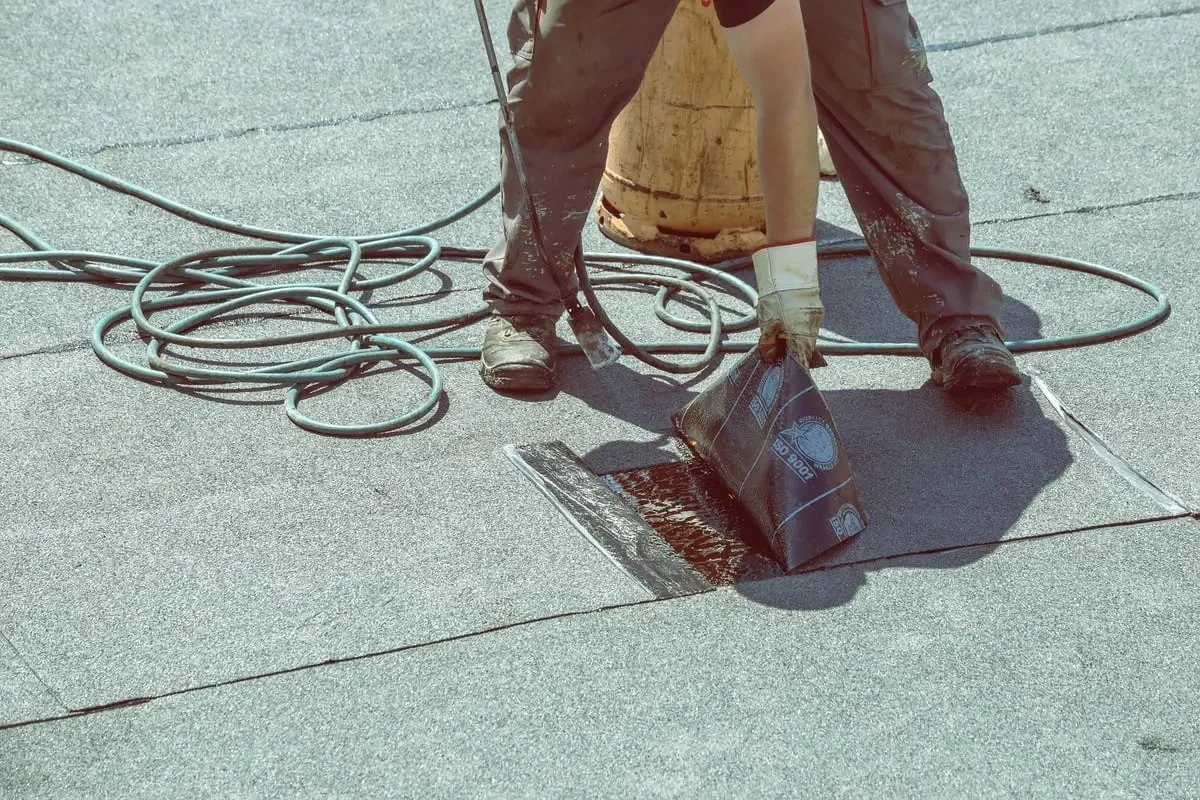
Attachment method varies by layer and by roof. We use torch-applied, self-adhered, and cold-adhesive methods depending on deck type, occupancy below, and local fire code restrictions, and on occupied buildings with tenants below we lean toward self-adhered or cold-process systems specifically to avoid open-flame torch work over occupied space.
Granulated Cap Sheets and UV, Hail Resistance
The mineral granules embedded in a modified bitumen cap sheet do two jobs: they protect the asphalt underneath from UV degradation, and they add a measure of impact resistance against hail, which matters on the more open ground toward Greenville and the airport corridor where summer storm cells can carry hail with little to slow them down. Granule loss over time is one of the clearest visual signs a modified bitumen roof is nearing the end of its service life.
We check granule coverage during every inspection on a modified bitumen roof, since bare spots that expose raw asphalt to direct UV accelerate degradation in that specific area faster than the surrounding cap sheet.
Repair and Recover on Existing Modified Bitumen
A lot of our modified bitumen work in older Fox Cities buildings is targeted repair rather than full replacement: reflashing a parapet, patching a blister, or re-lapping a seam that opened after years of thermal cycling. Full replacement gets recommended once the base layer itself has lost integrity rather than just the surface cap sheet.
- Full tear-off and multi-ply SBS replacement
- Torch-applied, self-adhered, and cold-process installation
- Cap sheet replacement over sound base layers
- Seam and blister repair on existing roofs
- Parapet and penetration reflashing
- Granule coverage and UV exposure assessment
Flashing Details That Fail First
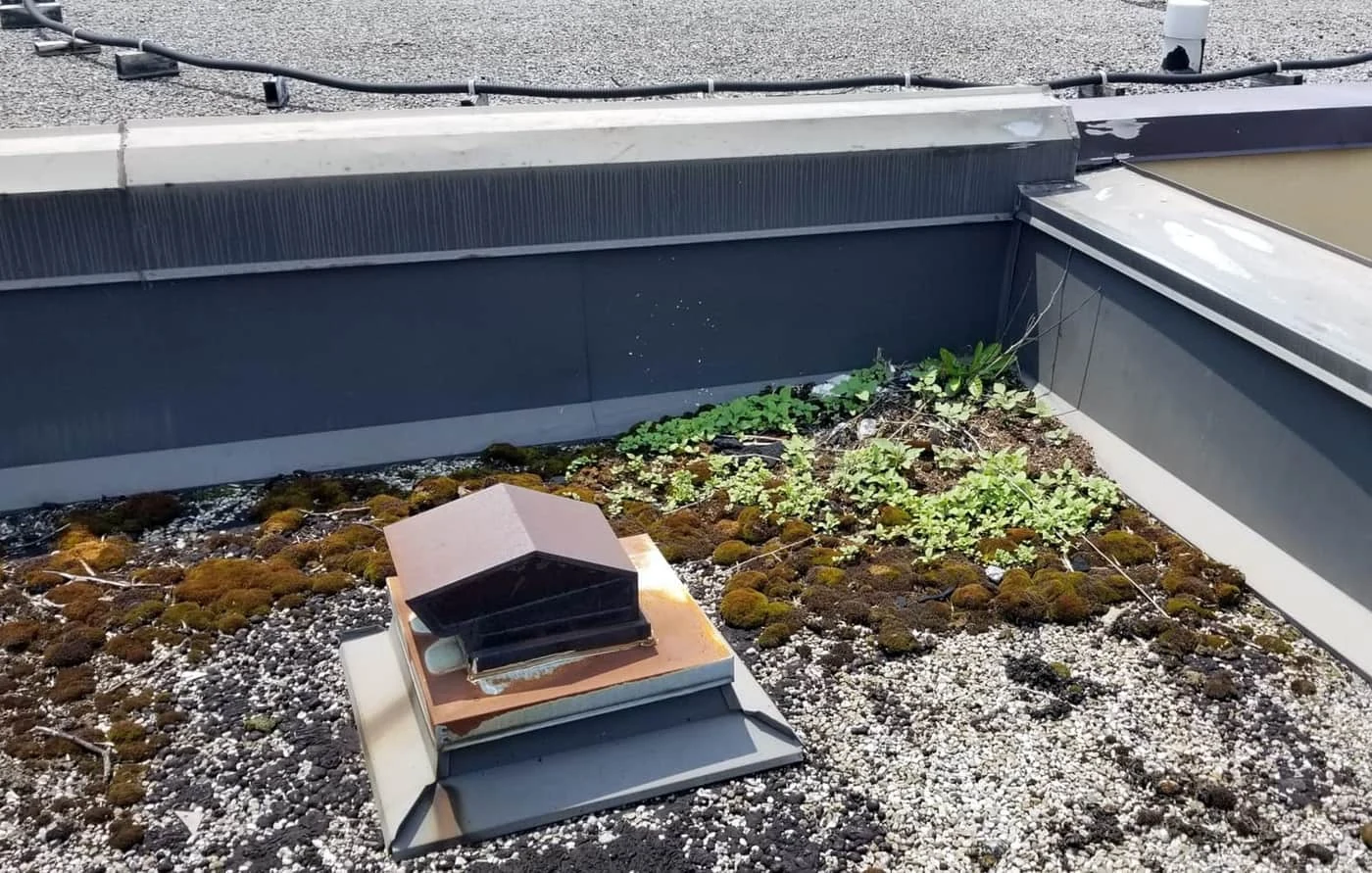
On modified bitumen roofs, base flashing at parapet walls and curb transitions tends to fail well before the field membrane does, particularly where a prior repair used incompatible flashing cement over a cap sheet it wasn't designed to bond with. We strip and rebuild flashing details to spec rather than layering another patch over a detail that was already wrong.
Roof edge metal and coping on older Fox Cities buildings often predates the current membrane by one or two roof generations, and loose coping is a common source of water intrusion that gets misdiagnosed as a membrane problem when the real issue is a fastening or sealant failure at the metal edge itself. We check coping fastener spacing and sealant condition on every modified bitumen inspection for that reason.
Modified Bitumen Questions From Building Owners
How does modified bitumen compare to TPO for our downtown Appleton building?
Modified bitumen tends to suit older buildings already carrying a multi-ply asphalt roof, where matching or capping the existing system costs less than a full tear-off to single-ply. New construction more often goes TPO or another single-ply system instead.
Is torch-applied installation safe on occupied buildings?
We use torch application selectively and with fire watch protocols, but on occupied buildings we default to self-adhered or cold-adhesive systems where practical to remove open-flame risk from the equation entirely, and we discuss that tradeoff with the owner before quoting the job.
How long does a modified bitumen roof last here?
A well-installed multi-ply SBS system typically runs fifteen to twenty-five years, with granule loss and seam condition being the main indicators of where a specific roof sits in that range.
Can you match a new cap sheet to our existing membrane color and texture?
Usually, since granulated cap sheets come in a limited set of standard colors that most manufacturers share, though exact matches across different manufacturers aren't guaranteed, and we'll show you a sample before ordering material for a partial recap.
What causes blistering on a modified bitumen roof?
Trapped moisture or air between layers during installation is the most common cause, which is why proper layer adhesion and venting detail during installation matters more on this system than owners often realize. Existing blisters get monitored rather than automatically cut open, since not every blister is actively growing or leaking.