
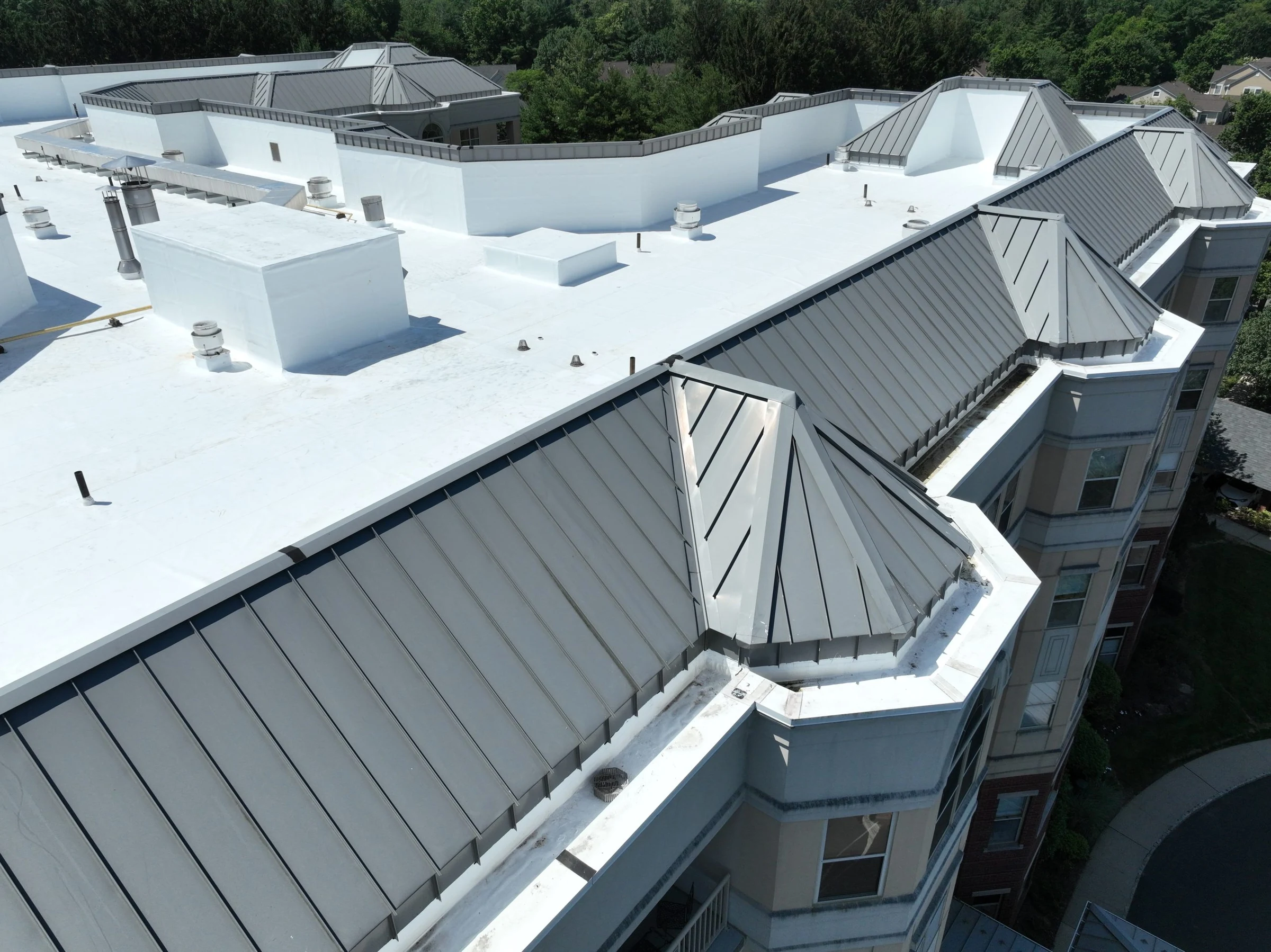
PVC Roofing in Appleton, WI
PVC Membrane Roofing for Grease, Chemical, and Exhaust Exposure
PVC gets specified less often than TPO or EPDM across the Fox Valley overall, but it's the right call on a specific category of roof: buildings with rooftop kitchen exhaust, food processing venting, or chemical exposure that would break down other membrane chemistries over time.
Why Grease and Solvent Exposure Rules Out Other Membranes
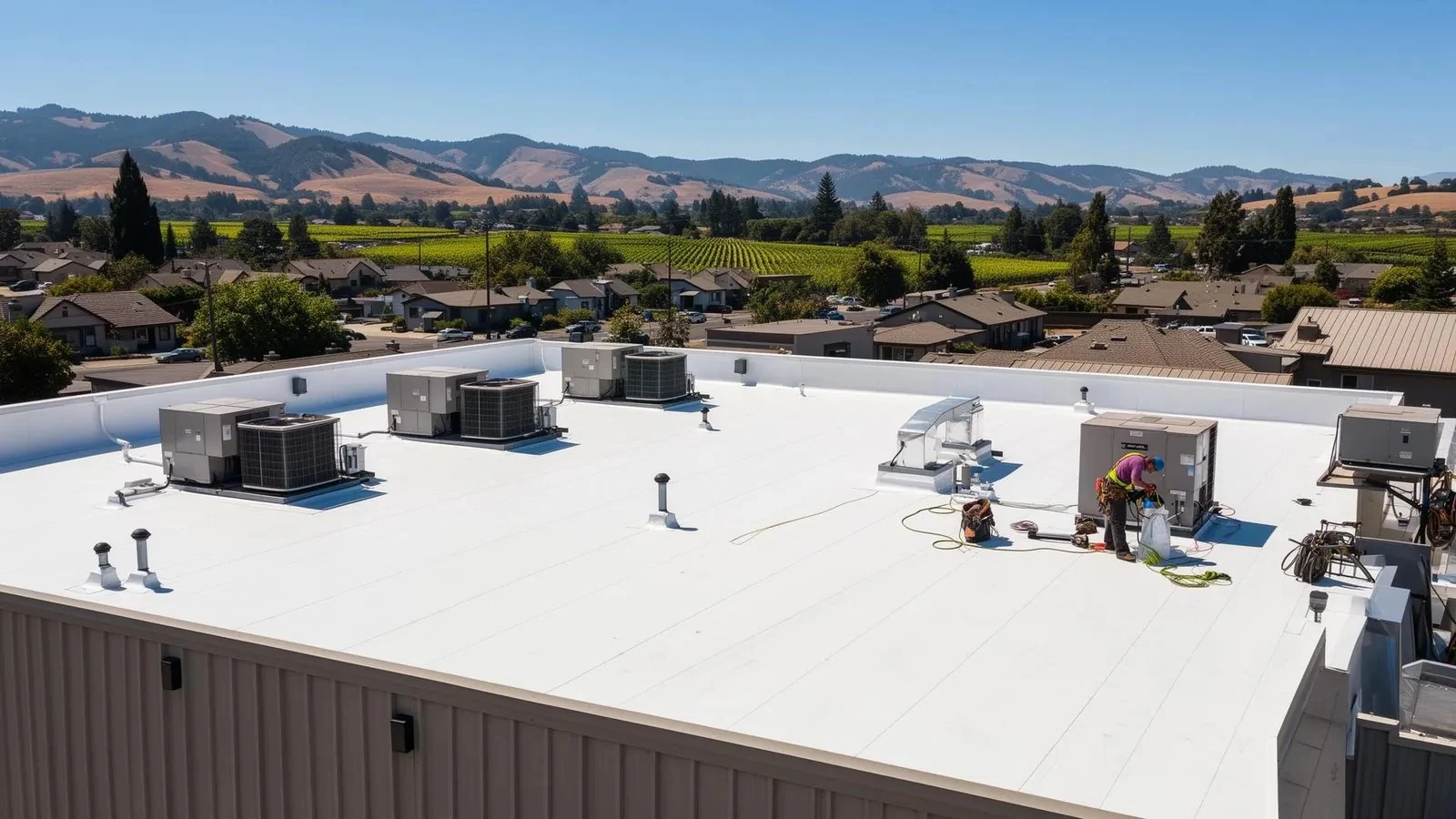
TPO and EPDM both lose plasticizer or degrade at the surface when exposed to prolonged contact with fats, oils, and grease, which is exactly what settles out of a rooftop kitchen exhaust fan on a restaurant or grocery store, or a processing line vent on a food plant. PVC's chemical makeup resists that kind of exposure far better, which is why we push owners toward it on food processing buildings in Little Chute and New London where venting sits directly over the membrane.
The same logic applies to buildings running solvent-based processes or industrial cleaning chemicals that can end up on the roof through venting or spillage from rooftop equipment. A membrane that holds up under that exposure for fifteen years beats one that needs a coating touch-up every few seasons to compensate for surface degradation.
Heat-Welded Seams and Weld Testing
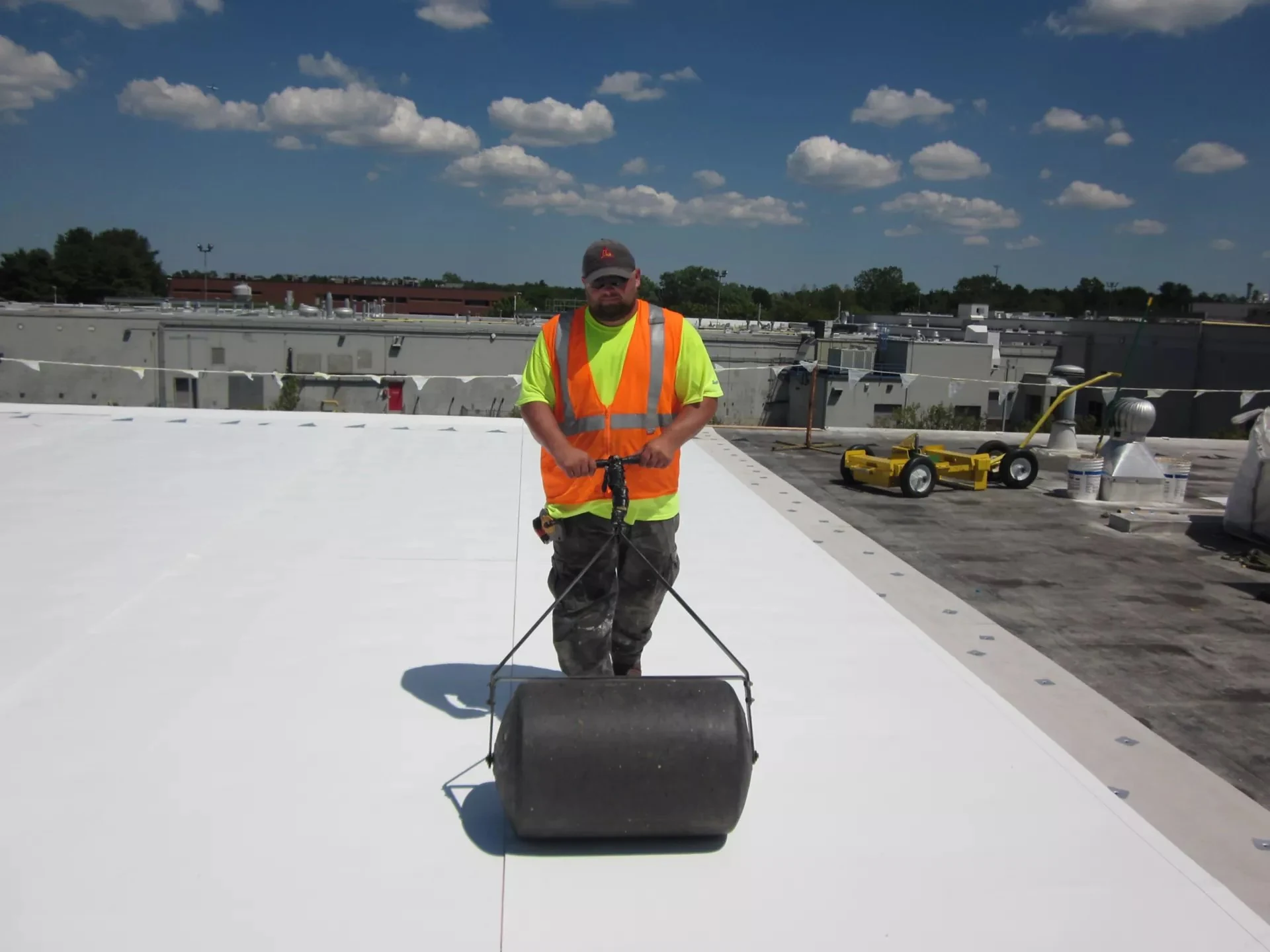
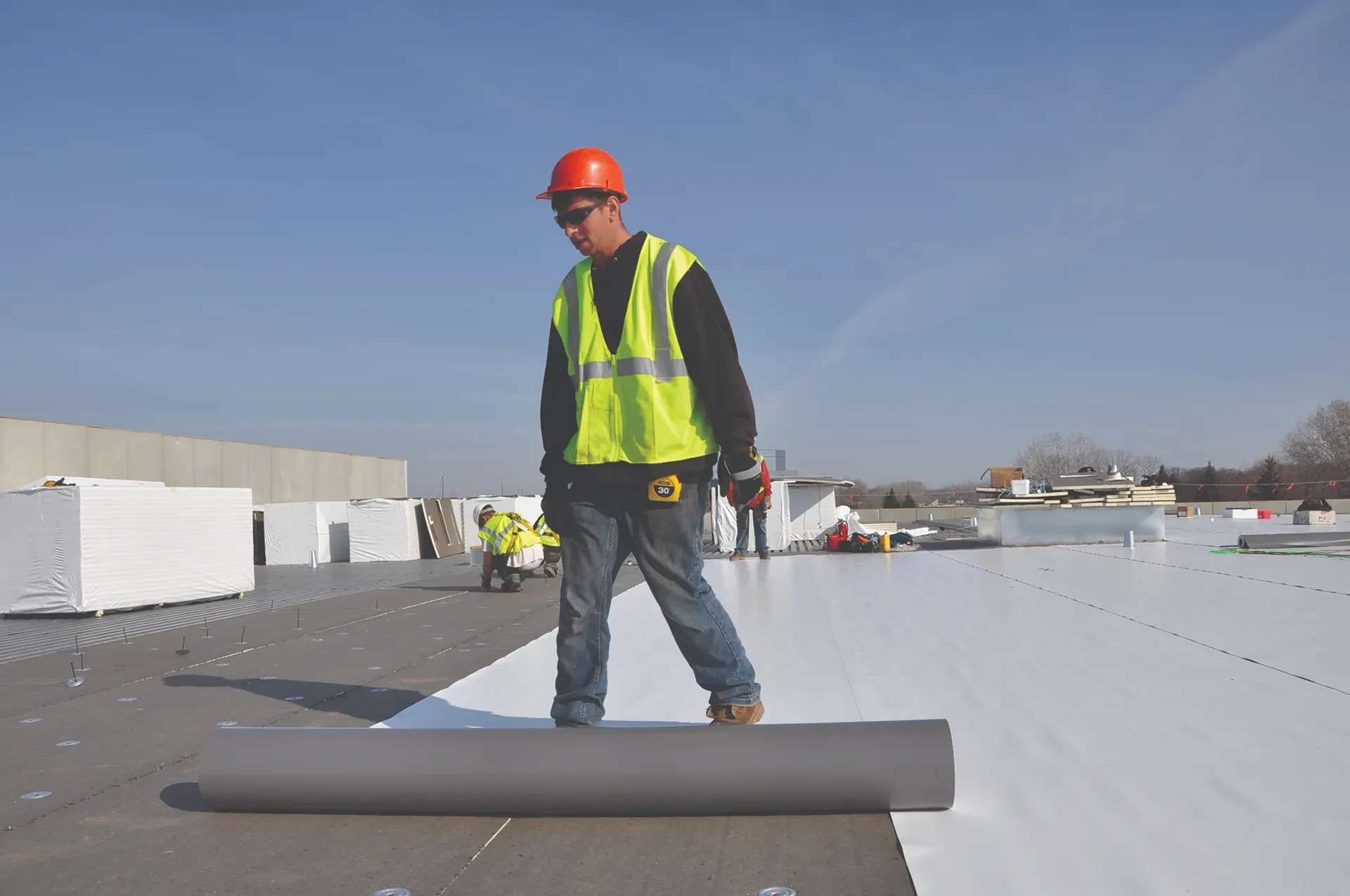
Like TPO, PVC seams are heat-welded rather than taped or glued, which gives a consistent bond when done correctly. We test every seam with a probe during installation and follow up with destructive weld testing on sample sections, pulling a strip to confirm the weld fails in the membrane itself rather than at the seam line before we sign off on a section as complete.
PVC membrane is more rigid than TPO at installation, which actually helps on detail work around curbs and penetrations near exhaust hoods, since the material holds a formed shape better during flashing work rather than needing constant re-tensioning.
Where We Use PVC Beyond Kitchen Exhaust
Beyond restaurant and food processing exhaust, PVC shows up on roofs near rooftop generator exhaust, some pharmaceutical or lab exhaust venting on medical office buildings, and occasionally on roofs where the owner wants a longer-proven track record than newer TPO formulations, since PVC has decades more field history in commercial use. We size each of these cases individually rather than defaulting to one membrane across an owner's whole portfolio.
- Full replacement over kitchen exhaust and process venting areas
- Heat-welded seam installation with destructive weld testing
- Chemical-resistant membrane for grease and solvent exposure
- Flashing detail around exhaust hoods and rooftop stacks
- Recover applications over compatible existing roofs
Cost and Lifespan Compared to TPO
PVC typically costs more per square foot than TPO, and owners without grease or chemical exposure usually don't need to pay that premium. We won't recommend PVC on a standard warehouse or office roof just because it's a more durable material in the abstract; the added cost has to match an actual exposure problem the roof faces.
On roofs where it is the right fit, PVC's service life tends to match or slightly exceed TPO, assuming the same attention to insulation condition and drainage design underneath it.
Insulation and Fastening Beneath a PVC Membrane
Insulation strategy under PVC doesn't differ much from what we'd spec under TPO in most cases, polyiso board in staggered layers to hit the required R-value and break thermal bridging at joints. Where it does differ is around exhaust penetrations, where we sometimes spec a denser cover board to give the membrane a firmer, more damage-resistant surface directly under high-traffic service zones near rooftop kitchen equipment.
Fastening pattern follows the same wind uplift zone logic as any mechanically attached single-ply system, with tighter spacing at corners and perimeters. On buildings near the more exposed ground around Greenville and the airport corridor, we don't relax that pattern just because the membrane itself is more chemically durable; wind uplift and chemical resistance are separate problems that both need to be solved.
PVC Roofing Questions From Fox Valley Facility Managers
Do we need PVC if our exhaust hood already has a grease trap?
A grease trap reduces but doesn't eliminate grease reaching the roof surface around the hood and ductwork. We still recommend PVC or at minimum a protective membrane layer in that immediate zone even with trap systems in place.
Can PVC be welded to an existing TPO roof during a repair?
No. The two membrane chemistries don't weld to each other reliably, so tie-ins between PVC and TPO require mechanical or adhesive transition details rather than a direct heat weld.
Is PVC more prone to cracking in cold Wisconsin winters?
Modern PVC formulations include plasticizers that maintain flexibility in cold weather, though older PVC roofs from decades ago sometimes show plasticizer migration and increased brittleness, which is something we check for during inspection of aging roofs, especially at flashing corners where the material sees the most repeated flexing.
How often should exhaust-zone PVC roofing be inspected?
We recommend twice-yearly inspection on roofs with active grease or chemical exposure, versus the standard annual or biannual schedule on a typical low-slope roof, since exposure zones age faster than the rest of the membrane.
Does PVC cost more to repair than TPO?
Repair costs run similar since both use heat-welding, though PVC patch material and labor sometimes carry a modest premium reflecting the material's higher base cost. We'll always tell you upfront if a standard TPO patch approach would work just as well for a non-exposure area of the same roof.